
Category: Linux
-
Setting Up a Static IP on Rocky Linux
This guide walks through setting up an Ethernet connection with a static IP on Rocky Linux, step by step. Adjust the IP address and device name to match your own setup as you go, since the interface name in particular varies from one machine to the next. Step 1: Check NetworkManager is Running Rocky Linux…
-
Setting up LAMP (Linux, Apache, MySQL/MariaDB, PHP) on Rocky Linux
This guide walks through setting up a full LAMP stack (Linux, Apache, MariaDB, PHP) on Rocky Linux 8. The steps are much the same on other releases and on RHEL, so just adjust the PHP and MariaDB versions to suit if you’re on something different. Prerequisites You’ll need a user with sudo privileges, which on…
-
Upgrading to PHP 8.2 on RHEL/RockyLinux
This guide covers upgrading to PHP 8.2 on RHEL and Rocky Linux. The default PHP that ships in the base repositories is usually an older version, so the approach here is to pull PHP 8.2 from the REMI repository, which packages current PHP releases for enterprise Linux, and then install the modules a typical web…
-
Securely Access Your Home Server Using Cloudflare and a Domain
If you’re running a service at home, like Nextcloud, and want to reach it securely from anywhere without opening ports on your router, a Cloudflare Tunnel is one of the cleanest ways to do it. The cloudflared daemon makes an outbound connection to Cloudflare, so your server stays reachable through your own domain over HTTPS,…
-
A Guide to Adding Groups and Users in Linux
Managing groups is a core part of controlling who can do what on a Linux system, since groups let you hand a set of permissions to several users at once rather than one by one. This guide covers the everyday tasks: viewing group membership, creating a group, adding and removing users, and giving a group…
-
A Guide to Crontabs: Scheduling Tasks
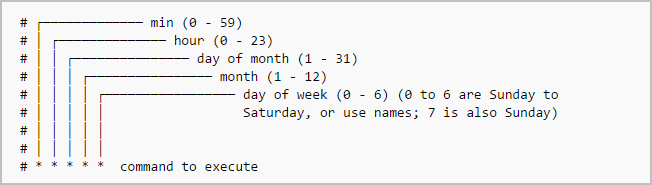
Cron is the standard way to schedule and automate tasks on Linux, from backups to cleanup scripts. In this guide, we’ll cover how to view, create, and remove scheduled tasks, and how to read the cron timing format so you can write your own schedules with confidence. Viewing Your Cron Table To see your existing…
-

Simplified Guide to Bash Aliases
In Linux, an alias is a custom shortcut for a command, letting you run a long or frequently used command with just a few keystrokes. This guide covers creating aliases, making them permanent so they survive a reboot, and loading them into your shell. Step 1: Open the ~/.bash_aliases File Keeping your aliases in a…
-

Set Up a Debian 11 System as a Server with Nextcloud (LAMP)
In this guide, we’ll set up a Debian server running Nextcloud, a popular self-hosted cloud storage platform, on a LAMP stack. It assumes you’re starting from a freshly updated Debian install with an SSH server already running, and by the end you’ll have a working Nextcloud instance you can log in to and, optionally, point…
-

Host your own website using WordPress on Debian 11
In this guide, we’ll install WordPress on a Debian server with Apache, going all the way from a fresh system to a working site you can log in to. Along the way we’ll bring PHP up to 8.2, set up MariaDB with a dedicated database and user, and configure an Apache virtual host to serve…
-
How to Install a LAMP Stack on Debian 11
In this guide, we’ll set up a LAMP stack (Linux, Apache, MySQL/MariaDB, PHP) on a Debian 11 server. A LAMP stack is one of the most common foundations for hosting dynamic websites and web applications, and once it’s in place you’ve got everything you need to run anything from WordPress to your own custom app.…